

Estimated reading time: 8 minutes
Filecoin is entering a market moment that increasingly rewards the kind of infrastructure it was built to provide.
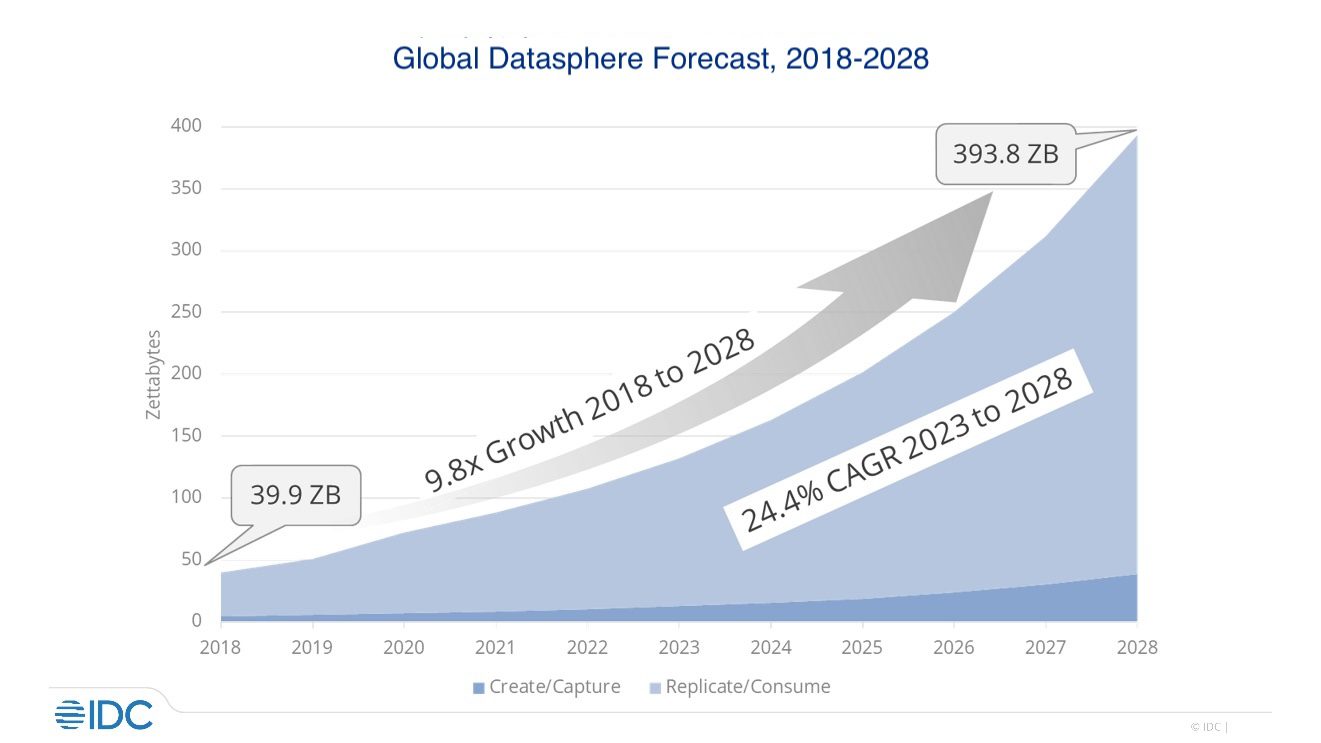
Global data creation is accelerating across AI, enterprise systems, public datasets, and machine-generated workloads. As that growth compounds, storage infrastructure is becoming more strategic, more capital-intensive, and harder to scale through centralized expansion alone. At the same time, AI is raising the bar for what storage needs to provide: not just capacity, but durability, verifiability, and fit for machine-driven workflows.
Together, these shifts are making Filecoin easier to understand as a more serious storage platform – one with real infrastructure, growing commercial relevance, and stronger alignment with next-generation data needs. Filecoin’s 2026 strategy reflects that shift, moving from supply buildout toward demand capture through paid onchain storage, stronger network economics, and flagship client adoption.
In this piece, we examine three forces shaping that opportunity:
- Data is growing faster than centralized storage can handle
- AI is shifting value toward infrastructure and data layers
- As infrastructure grows more strategic, lock-in costs are getting harder to ignore
1. Data growth is accelerating faster than centralized storage can comfortably absorb
The first macro shift is straightforward: the world is generating more data, across more systems, at a faster pace than before, creating a storage environment that is no longer growing linearly.
Even the dominant cloud model is still constrained by physical expansion. Amazon, Microsoft, and Google built the defining infrastructure model of the cloud era, but scaling it still depends on land, power, hardware, and time. Microsoft has already said that demand exceeded available supply across Azure workloads, pointing to a broader reality: as infrastructure becomes more power- and hardware-intensive, storage and compute are increasingly shaped by the limits of physical buildout, not just software demand.
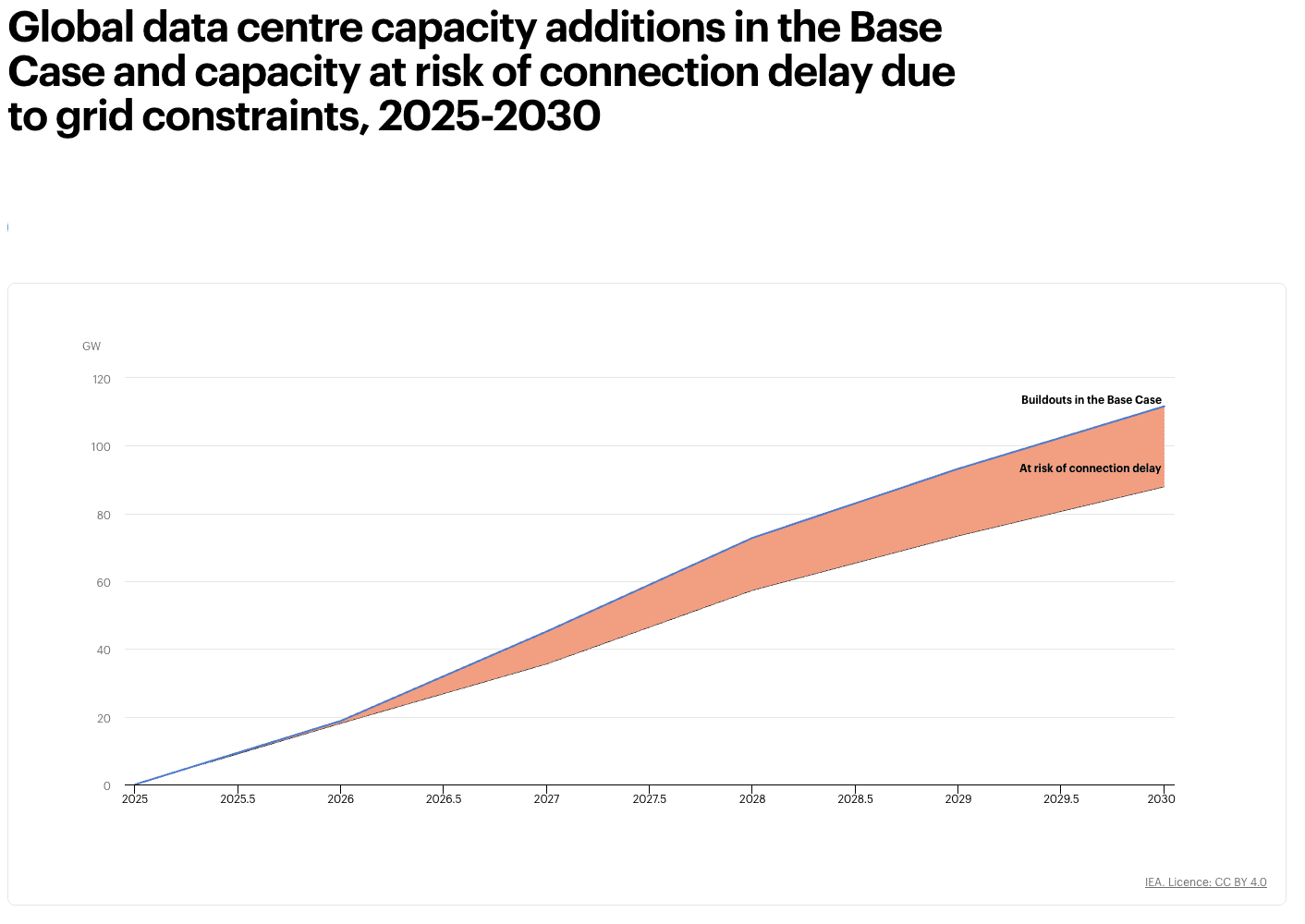
That constraint is already showing up in the buildout pipeline itself. Around one-fifth of planned global data-centre buildout could face connection delays due to grid constraints, highlighting how AI-era infrastructure growth is increasingly shaped by physical bottlenecks.
This is where Filecoin becomes more relevant. Its model does not depend on one company expanding its footprint one location at a time; it aggregates storage capacity across a distributed network of providers.
At peak onboarding in 2021, the network added more than 59 PiB of raw storage in a single day, showing how quickly real infrastructure could be deployed across that base. That makes Filecoin more than a different storage architecture. It makes it a different supply model – one with meaningful capacity, broad operator participation, and a way of scaling infrastructure that is fundamentally less tied to centralized buildout.
2. AI is shifting value toward infrastructure and data layers
What some in tech and AI circles have started calling the “saaspocalypse” is less the end of software than a shift in where value accrues. As AI becomes more capable, it may start to replace parts of the traditional SaaS layer – including workflows businesses may once have paid for on a per-seat basis. But as that happens, value does not disappear; it tends to move down the stack. Infrastructure and data-layer businesses are already benefiting as value shifts down the stack. Palantir reported 70% year-over-year revenue growth in Q4 2025, while Databricks said in February 2026 that it had surpassed a $5.4 billion revenue run-rate, growing more than 65% year over year, with its AI products alone crossing a $1.4 billion run-rate.
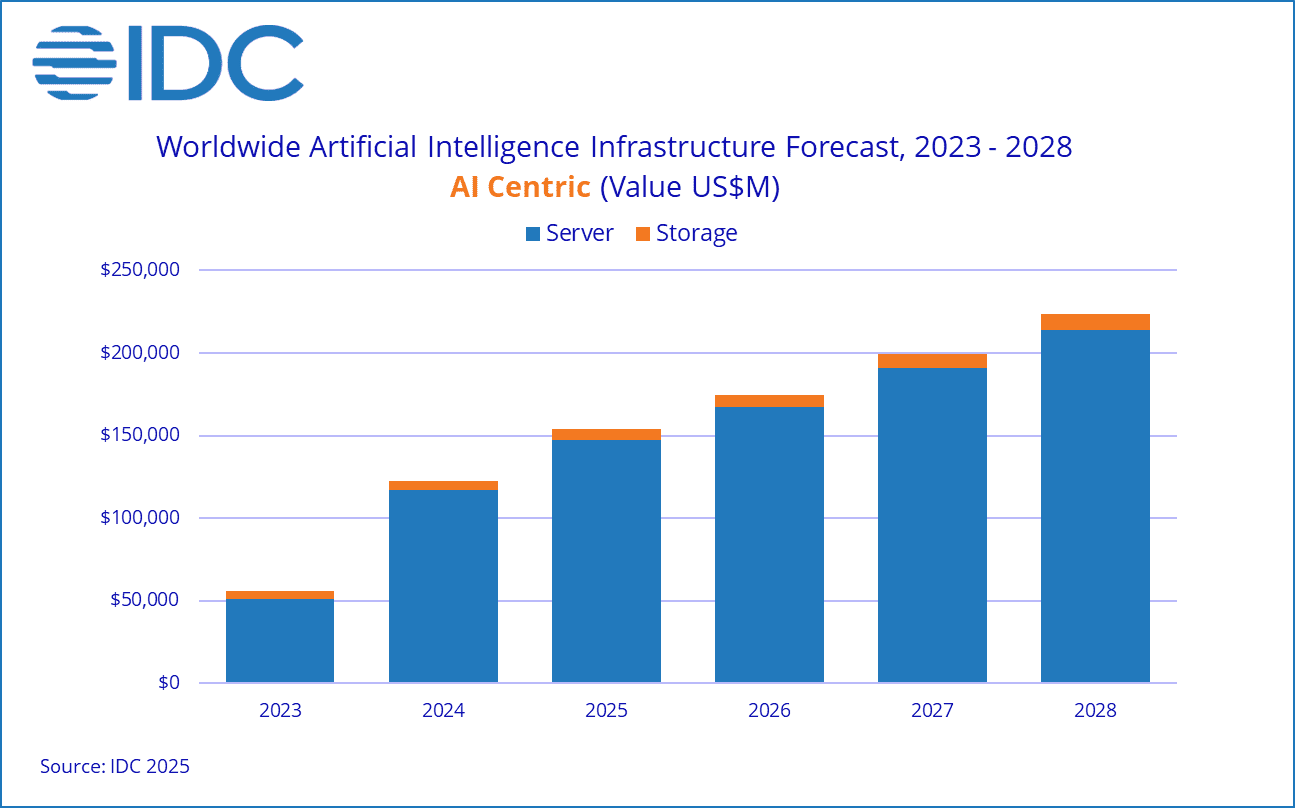
That same shift is also visible at the market level. Spending on AI infrastructure is rising sharply, reinforcing that AI is no longer a marginal software layer but a core infrastructure priority.
As AI systems move deeper into business workflows, the question of what businesses need from their infrastructure also changes. That raises the importance of properties that matter in practical terms:
- Resilience – so data is not lost
- Provenance – so teams can understand where data came from and how it has been handled
- Sovereignty – so sensitive data can be controlled and moved more easily across systems
- Verifiability – so businesses can check that data has been stored, handled, and preserved as expected
The recent interest in tools like OpenClaw reflects a broader desire to keep more AI-driven workflows on users’ own devices, with greater control over how data is handled, who can access it, and what remains verifiable over time.
That is where Filecoin’s relevance becomes clearer. It is designed around verifiable storage, which matters more in an environment where data is harder to trust, more valuable to validate, and increasingly consumed by systems rather than people. As datasets grow larger and more distributed, those requirements become more important – not just technically, but commercially, because businesses need stronger confidence in the data that underpins real workflows, products, and decisions.
Emerging use cases make that argument more tangible. 375ai, which says its edge network is deployed across more than 40,000 retail, industrial, and logistics locations in the U.S., is working with Akave on a verifiable data pipeline that includes redundant backups on Filecoin for added durability. It is a useful example of how AI-era data infrastructure can converge around provenance, sovereignty, and durable storage by design.
3. As infrastructure becomes more strategic, the costs of lock-in become harder to ignore
The integrated cloud model delivered a powerful value proposition: convenience, scale, tooling, and performance inside one ecosystem. That is a large part of what made AWS, Azure, and Google Cloud so dominant. But as infrastructure becomes more strategic, the tradeoffs of that model become more material – especially when moving data across closed infrastructure ecosystems carries real cost and friction.
A 2026 survey from Parallels found that 94% of organizations are concerned about vendor lock-in, with nearly half saying they are very concerned.
As data volumes grow, those tradeoffs become more material. What feels manageable at a smaller scale can become far more constraining once datasets are large, long-lived, and central to business operations. Infrastructure decisions become harder to reverse, and architectural dependency becomes more expensive to absorb.
That does not mean enterprises are abandoning hyperscalers. They remain foundational. But it does mean businesses may become more open to complementary infrastructure models with different tradeoffs around portability, verification, reach, and cost.
This is another place where Filecoin becomes more legible in market terms. Amazon, Microsoft, and Google remain foundational, but their dominance also makes the limits of the integrated model more visible as infrastructure requirements change. Filecoin offers a different infrastructure logic – one built around globally aggregated supply, verifiable storage, and a more modular approach to how data and workloads can be retained, moved, and increasingly composed across layers. That is what makes Filecoin increasingly credible not only as infrastructure, but as a complement within the broader infrastructure stack.
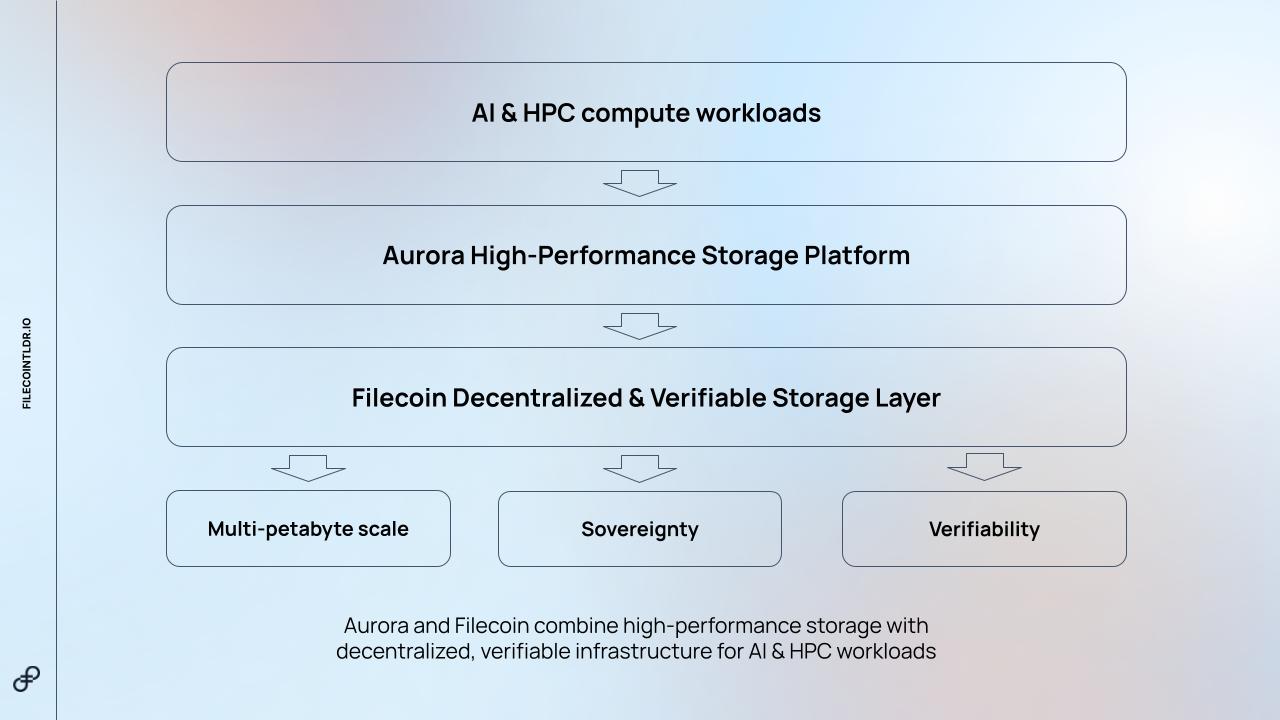
That broader positioning is becoming easier to see in the ecosystem itself. Aurora is partnering with a European AI and high-performance computing (HPC) provider to deliver high-performance storage powered by Filecoin across 100MW AI compute data centers in Europe. The solution is built for multi-petabyte workloads, high-speed access, and stronger guarantees around privacy, sovereignty, and verifiability in data-intensive AI environments.
Why this moment matters now
What makes this moment more important is not just that the market is changing. It is that the market is changing in ways that increasingly align with what Filecoin was built to offer.
Data growth is accelerating. AI is making infrastructure and data layers more strategic, more trust-sensitive, and more operationally important. And as infrastructure decisions become harder to reverse, businesses are becoming more attentive to portability, control, and the limits of closed infrastructure models.
At the same time, the Filecoin ecosystem is becoming more commercially legible. The strategic shift toward paid onchain storage, stronger network economics, and flagship client adoption matters because macro tailwinds only matter if the infrastructure is positioned to capture them.
That is what makes this moment more consequential. Filecoin is becoming easier to understand not just as an alternative architecture, but as infrastructure increasingly aligned with where the market is going.
Follow the ecosystem’s 2026 push toward paid usage, stronger economics, and flagship client adoption.
→ Read the 2026 Filecoin Network Strategy
To stay updated on the latest in the Filecoin ecosystem, follow the @Filecointldr handle or join us on Discord.
Many thanks to Jonathan Victor and Oleh for providing valuable insights to this piece.
Disclaimer: This information is for informational purposes only and is not intended to constitute investment, financial, legal, or other advice. This information is not an endorsement, offer, or recommendation to use any particular service, product, or application.