

Layer 2 solutions (L2s) are essential innovations in blockchain technology that enhance the scalability, efficiency, and functionality of their respective networks. For Filecoin, an L1 focused on decentralized storage, L2 solutions play a crucial role in bringing new capabilities to the base infrastructure of the network.
As Filecoin continues to grow, L2 solutions are helping bring Filecoin to market, and creating tailored offerings to builders focused on specific verticals. This post explores the current state of L2 solutions on Filecoin, highlighting the pioneering advancements and future directions.
Underlying Architecture
Before diving into the L2s, it’s useful to understand the shared framework that many of Filecoin’s L2s are built on: Interplanetary Consensus (IPC).
InterPlanetary Consensus (IPC) is a framework designed to solve the problem of scalability in decentralized applications (dApps). IPC achieves this by allowing the creation of subnets, which are independent blockchains that can be customized with specific consensus algorithms tailored to the needs of the application. These subnets can communicate seamlessly with each other, minimizing the need for cross-chain bridges – but anchored into the root Filecoin network.
Builders are drawn to IPC for several reasons. First, IPC subnets inherit the security features of their parent network, ensuring a high level of security for the dApps they host. Second, IPC leverages the Filecoin Virtual Machine (FVM), a versatile execution environment that supports various programming languages, allowing for greater interoperability with other blockchains. Finally, IPC’s tight integration with Filecoin, a large decentralized storage network, offers dApps easy access to robust data storage and retrieval capabilities. This combination of scalability, security, interoperability, and storage integration makes IPC an attractive choice for developers building the next generation of dApps.
Advancements in Data Management with Filecoin’s L2 Solutions
As the demand for efficient data management increases, Filecoin’s Layer 2 solutions are rising to meet these needs. These advancements focus on optimizing data storage and retrieval, offering enhanced scalability and cost-effectiveness across various applications. Basin is one such startup leading the charge.
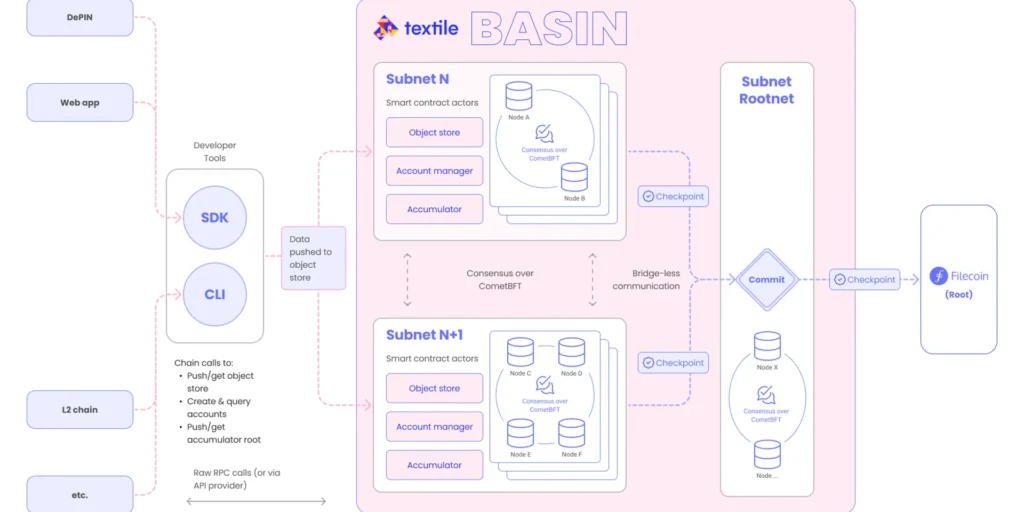
Basin, the first data Layer 2 on Filecoin, represents an advancement in decentralized data infrastructure, bringing a swath of new services into the Filecoin ecosystem targeted at data heavy applications:
- Key Features and Innovations
- Hot and Cold Data Layers: Basin’s dual-layer approach incorporates a hot cache layer for real-time data access and a cold storage component for long-term archiving. This setup ensures both immediate accessibility and cost-effective storage, catering to diverse data needs.
- Scalable Infrastructure: Basin’s architecture combines Filecoin’s secure storage capabilities with a flexible, scalable design ideal for handling high-volume data from IoT and AI applications.
- Familiar Interfaces: Basin supports compatibility with S3, allowing developers to use familiar tools for managing data, which facilitates a smoother transition to decentralized solutions.
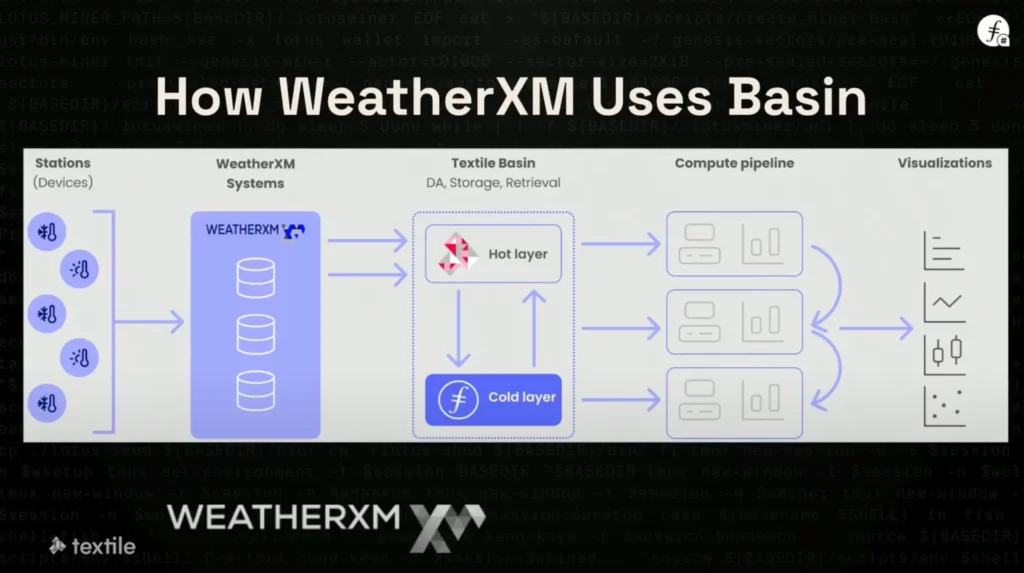
Basin is being actively used in real-world applications, such as handling weather data for decentralized stations with WeatherXM, and generating synthetic data for smart contracts. These use cases highlight Basin’s ability to efficiently store, manage, and monetize diverse data types, advancing practices in AI and machine learning.
Simplifying Decentralized Storage: Innovations and Challenges
Efficiently managing decentralized storage involves overcoming challenges related to user accessibility, cost, and integration. Providing more intuitive and cost-effective tools for data management will help address these challenges – and this is where Akave comes in.
Akave is the first L2 storage chain powering on-chain data lakes, offering a novel approach to managing large volumes of data within a decentralized network. Data lakes are used in traditional enterprises to manage all types of data – typically feeding into large scale compute flows (e.g. for big data analytics). By leveraging Filecoin’s infrastructure, Akave aims to become a leading solution in decentralized data management, with a focus on enhancing data handling capabilities and integrating advanced security measures.
- Key Features and Innovations
- On-Chain Data Management: Akave focuses on creating on-chain data lakes, which provide a highly scalable and secure solution for managing large volumes of data directly on Filecoin.
- Advanced Data Handling: The platform supports customizable data handling options such as replication policies and erasure coding, enhancing data security and availability.
- Integration with Filecoin: Akave leverages Filecoin’s blockchain for improved data management, security, and decentralization.
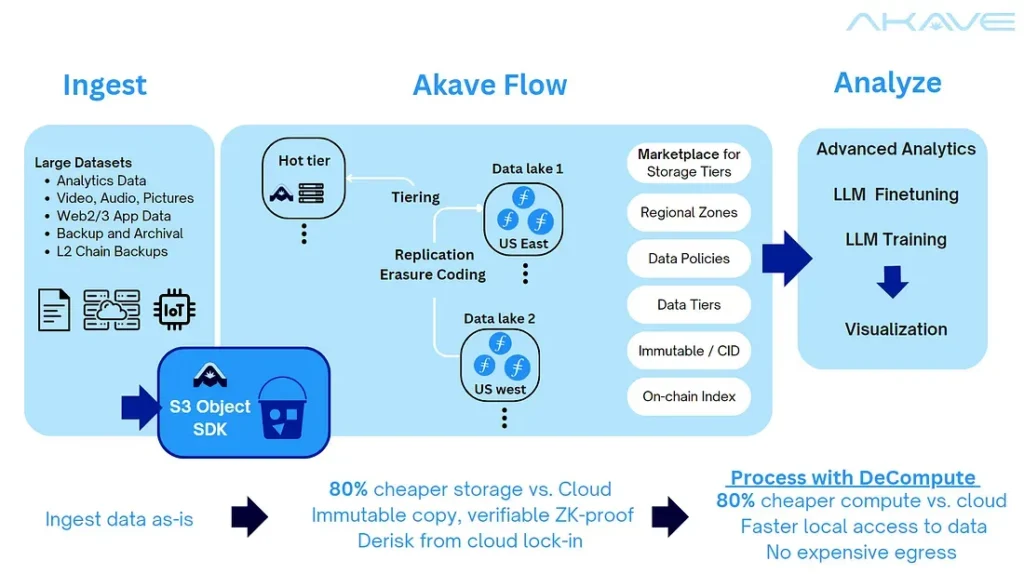
Akave’s Decentralized Data Lakes revolutionize data storage with faster local access by placing data close to compute stacks, cutting egress costs compared to centralized clouds, and ensuring immutability and integrity through ZK Proofs. Users benefit from competitive pricing and diverse options via an open marketplace. Continuous visibility into data status and history is provided through Akave’s integration with Filecoin’s InterPlanetary Consensus (IPC), enhancing transparency and trust.
Enhancing AI and Unstructured Data Storage with Filecoin’s L2 Solutions
In the realm of AI and unstructured data, specialized storage solutions are crucial for managing and processing large datasets efficiently. Filecoin’s Layer 2 solutions like Storacha Network are stepping up to provide high-performance storage tailored for these needs.

Storacha Network is a cutting-edge storage solution designed to enhance the management of AI and unstructured data. Leveraging Filecoin’s robust infrastructure, Storacha Network offers high-performance decentralized storage tailored for advanced applications. Looking ahead, Sriracha envisions evolving into a federated network with increased public participation, aiming to enhance global data access through a decentralized CDN and fostering broad community involvement.
- Key Features and Innovations
- High-Performance Storage: Storacha offers decentralized hot object storage, ensuring rapid access and retrieval of data, essential for AI applications that require quick processing and scaling.
- Provenance and Ownership: Users maintain control over their data through UCANs (User-Controlled Authorization Networks), providing secure, cryptographic proofs of data ownership and access rights without frequent blockchain interactions.
- Efficient Data Handling: Storacha handles large datasets by sharding files, facilitating quick retrieval and efficient management, crucial for large-scale AI operations.
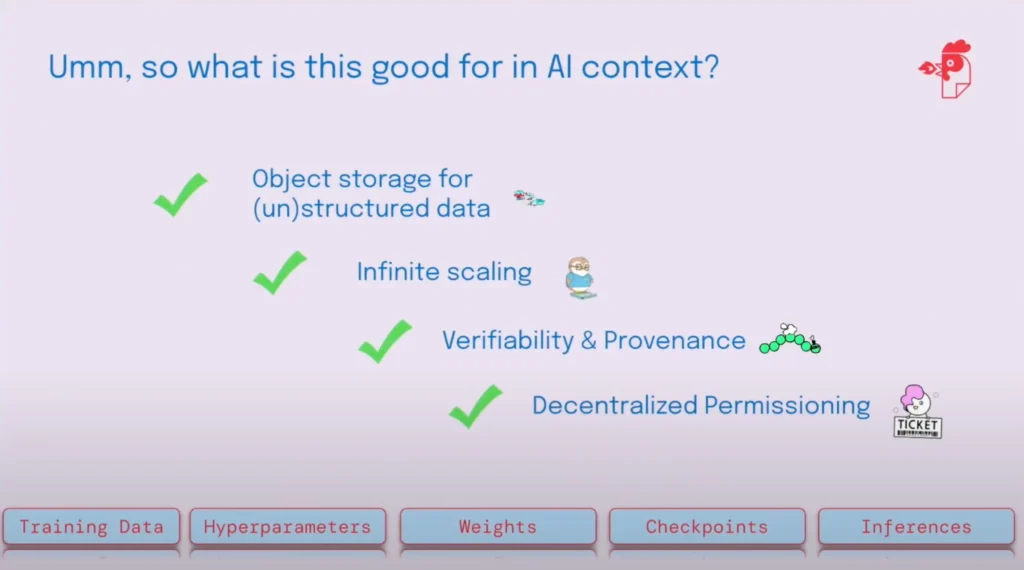
Storacha Network supports a range of AI use cases by providing fast, scalable object storage optimized for both structured and unstructured data. It addresses key needs such as verifiability and provenance for decentralized GPU networks, ensuring that training processes are executed as expected and checkpoints are maintained.
Additionally, Storacha allows users to bring their own storage to training jobs, facilitating the sharing of hyperparameters and weights while ensuring ownership of training results.
In Conclusion
To wrap up, Filecoin’s Layer 2 solutions are paving the way for a new era in decentralized data management. Innovations like Basin, Akave, and Storacha Network are not only addressing the challenges of scalability and cost but also enhancing the efficiency and performance of data handling. As these technologies evolve, they promise to transform how data is stored, managed, and utilized, marking significant progress in the Web3 ecosystem.
To understand more about Basin, Akave or Storacha Network, watch their keynotes at the recent FIL Dev Summit.
Many thanks to Jonathan Victor for reviewing and providing valuable insights to this piece.
Disclaimer: This information is for informational purposes only and is not intended to constitute investment, financial, legal, or other advice. This information is not an endorsement, offer, or recommendation to use any particular service, product, or application.